Column · @zionfence-builderwukl105
Fencing Installers Share Tips for Very Little Lawn Damages
A good fencing need to not come with a marked grass, smashed beds, and ruts that take a season to recover. The distinction in between a tidy work and a destroyed lawn typically appears prior to the very first opening is dug. It is in exactly how the crew prepares access, manages soil, and cleans up as they go. After two decades in the area, working with and educating Fence Installers, walking even more properties than I can count, I can inform you the simple component is placing posts in the ground. The hard part is leaving a home resembling we were never there.
This is the playbook trustworthy Fencing Contractors utilize to keep your turf green, your beds undamaged, and your irrigation to life. It is also a means to identify a solid Fence builder throughout price quotes, since the ones that protect backyards speak about it upfront and rate for it honestly.
What really wreck a yard
Most house owners believe hefty equipments are the major problem. Typically, the real damage comes from smaller sized routines that multiply over the day. Repetitive foot web traffic develops ruts in wet soil. Ruin piles cook grass when clay rests on it for hours under sun. Wet concrete sprinkles etch pavers and tarnish stone. A solitary wheelbarrow, pressed a hundred times, leaves a groove that accumulates water and becomes a sloppy joint. One reckless shovel can punch via an irrigation lateral or cut low-voltage illumination cable.
The soil kind matters. Sandy loam drains fast and recuperates quicker, yet it can collapse around holes. Dense clay transforms to pudding after rain, holds impacts like plaster, and smears around lawn. On sloped lawns, runoff pulls fines downhill, leaving bald streaks. Turf kind matters as well. Kentucky bluegrass endures traffic if dry. Fescue floor coverings down and breaks blades when filled. Zoysia is durable when developed, yet slow-moving to rebound in spring.
A seasoned Fencing Contractor checks out these signs. When a Fence Installer walks your backyard and scans downspouts, yard dampness, quality, and plantings without excitement, you are in better hands than with somebody infatuated only on fencing design and price.
The planning walk that avoids 80 percent of damage
A strong fencing build starts with a sluggish lap. I bring noting paint, flags, a probe, and a camera. We mark energies, both public and exclusive. Public situates locate gas, electric, interaction. Private lines, like watering, landscape illumination, or swimming pool conduit, will certainly not be marked by the one-call solution. We request for irrigation maps or run a fast cycle to find heads and manifolds, then note them. If there is no map, a simple probe commonly locates the side lines at 4 to 8 inches deep.
Photo documents helps establish expectations. We shoot existing bare places, pet dog routes, and the shape of compost beds. Property owners often fail to remember that a spot existed, so images maintain us truthful both ways.
Then we prepare accessibility. Can material be presented on the driveway rather than the lawn. Is there a gateway broad sufficient for a tiny track maker, or is this a hand bring day. Will the neighbor enable flow along a gravel street to avoid going across sod. A cautious Fencing Installer will certainly recommend turning the build sequence to lessen cross web traffic. We could set posts on one side of the backyard, string the line, and totally backfill, after that carry panels along the mounted line as opposed to via the lawn center. It includes time however saves turf.
The finest Fence builders appoint a spotter whose job is to view footpaths, close gateways, and maintain spoil on tarpaulins. That person does not turn a hammer. They avoid oops moments that cost hours.
Timing and climate, the silent variables
There is an array when dirt is friendly. On the majority of clay-heavy whole lots, 2 to 3 days after a moderate rain is workable. Same-day excavating after a tornado compounds damages. On severe summer season weeks, early morning is more secure for beds and lawn, prior to heat tension makes every footprint a swelling. Icy soil can appear safety, once the sun softens the top inch you obtain a skating rink of mud over permafrost. That slick layer splits as website traffic continues.
We as soon as moved a 220-linear-foot cedar job from Friday to Monday after a heavy Thursday storm. The client aspired, but we held. Monday we utilized boards for crossings and left no ruts. If we had actually pressed on Friday, that level lawn would have appeared like a tractor pull. Great Fence Contractors gain their track record with these judgment calls. If a Fence builder never ever raises routine changes for climate, they either just hand dig or they want to risk your yard to stay clear of rescheduling.
Protecting gain access to paths without overcomplicating
Ground security does not need to be fancy, however it should be deliberate. We bring composite floor coverings and likewise utilize three-quarter-inch plywood when weights are light. On limited sites, one mat suffices if you leapfrog it ahead and maintain the wheelbarrow on it. In soft conditions, we increase up at transforming points, because that is where ruts flower. Presenting areas go on difficult surfaces when feasible. If we need to stage on grass, we raise weekly on multi-week work so the lawn can breathe.
A small upgrade several property owners value is a momentary route of landscape material under the floor coverings. It stops penalties from pumping up right into the grass and makes cleanup quicker. For bed sides, we set brief 2 by 6 planks alongside the bordering. They function as an aesthetic and maintain a popped wheel from eating the border stones.
We likewise avoid driving across tree origin flares. If we should go across a root zone of a maple or oak, we position a layer of crude compost under the mats to distribute lots. Roots live superficial, usually in the leading 12 to 18 inches. Crushing them does more harm than most people realize, and you may not see decline until next season.
Here is the compact protection kit that survives our truck, beneficial for any Fence Installers or house owners eyeballing a careful install:
- Four 4 by 8 composite ground floor coverings for major paths
- Six sheets of three-quarter-inch plywood for leapfrogging and turns
- Contractor tarps and woven landscape material for spoil zones
- Two 2 by 6 by 12 boards for bed and paver side guards
- Flagging tape, paint, and a dirt probe for noting hazards
Digging methods that save the lawn
Hand excavating continues to be the lightest footprint if you have the crew and the soil coordinates. For 60 to 80 feet of fence with eight-foot message spacing, you are taking a look at 9 to 11 holes. A two-person group with sharp clam shells and a digging bar can complete in half a day in loam, but anticipate a complete day in clay or gravelly fill. The benefit is almost no turf damages and clean spoils.
Gas or battery augers include speed yet can smear clay and leave untidy spoils. We mitigate by using tarps that prolong past the hole side by a minimum of 18 inches. The auger operator stays squared to the line, not pivoting in position, which carves circles into lawn. On slopes, we set the tarpaulin with a downhill berm made from 2 by 4 scraps so penalties do not flow.
Mini skid guides save backs, yet they need restraint. Tracks disperse weight much better than tires and decrease sink. We appoint a watchman, keep the container low, and restriction turns. The operator backs out right, then carries out gentle, wide turns on floor coverings, never pivoting on grass. When bring concrete or gravel, we make use of lidded containers, not open containers, so slosh and splilling do not pepper the lawn.
Vacuum excavation is a wise tool near utilities, watering manifolds, or superficial origins. A small device with a water lance and vac tube can open up a 10 to 12 inch opening with medical accuracy. The slurry goes into a storage tank, out your lawn. It costs more per hole, so we use it purposefully, not across the entire run.
Driven messages and helical supports can lower yard disruption even more. For certain fence styles, a Fence Contractor can drive steel articles with a gas vehicle driver, then sleeve with vinyl or affix timber rails. Helical piles turn into the ground with very little spoil. Both techniques excel on limited sites or around tree roots. The tradeoff is viability. Rocky dirts can deflect drives, and helical supports call for accessibility for a torque motor. Not every Fencing Builder is educated on these systems, so ask during estimates.
Spoil control, backfill strategy, and clean concrete habits
Where the dirt goes defines exactly how your grass checks out sundown. All spoils come down on tarpaulins. We keep a set of 10 by 20 tarpaulins per staff and put them so the short side satisfies the fence line. That positioning provides room for web traffic and a tidy fold when done. On clay sites in summer, we double layer tarpaulins to reduce bleed-through and turf burn.
Backfill differs by soil. In tidy sandy loam, we reuse indigenous dirt, compressed in lifts. In clay, we like a crushed rock backfill blend around articles, commonly three-eighths minus with fines. It drains pipes better and reduces frost heave. If the layout asks for concrete, we maintain bags off the yard, mix in bathtubs on plywood, and carry in containers. For no-mix style installs, dry loading concrete around an article without blending creates dirt that wanders. We wet the trench first and maintain a pipe prepared. Any type of dash on pavers or stone obtains rinsed quickly, because concrete engraves fast.
We do not overfill holes. A small dish at each message aids shed water and keeps later yard growth flush with the grade. A heaved mound ends up being a lawn mower scalp waiting to happen.
Protecting plants and beds
Hedges and perennials do not like a rough day. We connect back bushes with soft straps, never ever wire, and just to sturdy risks driven outside the root zone. For roses or hydrangeas near the fence line, we set a strip of inflexible plastic or masonite to protect walking canes from an auger swing. If a bed side must be gone across, we link with planks and floor coverings so feet and wheels never touch mulch.
Irrigation obtains regard. Prior to digging near a marked lateral, we reveal by hand, not by auger. Where a fence will run near a spray head, we pull and cover the head, after that leave components in a classified bag for the watering tech or re-install ourselves if gotten to do so. I have seen extra damages from unmarked drip lines than from any type of various other single product. A quick check along bed lines typically reveals the 17 millimeter tubing, and a $2 combining beats a dead plant later.
For treasured trees, we speak with an arborist when blog posts drop within the essential origin area. Often we run the fence line around the root flare or pick surface-mount braces on a reduced concrete visual. I have actually set up beautiful cedar in between galvanized blog posts established on a narrow quality beam of light as opposed to in deep tree-root holes. It saved a heritage oak and looked sharp.
Slopes, drainage, and the covert traps
Installations on slopes usually cause erosion marks if crews are negligent. We established our floor coverings perpendicular to the autumn line, not parallel, to disrupt overflow. Spoils sit on the uphill side. If water shows up in holes, we quit and dewater with a little pump or crushed rock sump, not by bailing soil-water slurry onto grass.
French drains pipes, swales, and downspout lines snake across yards. Your Fence Installer should determine and note them. A message via a drain line traps water and turns the grass right into a soggy mess after the first storm. On a hill project last spring, our probe found a superficial four-inch corrugated drainpipe 14 inches off the building line. We relocated the fence in by 6 inches, sleaved the line under one bay, and stayed clear of a future migraine. That six-inch change would have been invisible if we had not claimed it aloud to the property owner first.
Property lines and neighbors, the refined resource of dig creep
When building lines are obscure, teams stray the string. That movement indicates added openings and additional turf damages when you realize a run is off and have to be corrected. The fix is boring but dependable. We set string lines from surveyed pins or from an accredited surveyor's marks, verify with both next-door neighbors, and clip the string high enough that it does not journey people. We do not rely upon old fences as the accurate line, because numerous lean or were placed for benefit at the time.
Talk to the next-door neighbor concerning accessibility and drainage. Deal to lay floor coverings along their side if there is nothing else way to relocate products. Sharp Fence Contractors never presume permission. A calm five-minute chat saves the team from being gone after off mid pour.
Cleanup that looks like we were never there
Crews who clean up throughout the day leave yards grinning. End-of-day clean-ups are not a solitary sweep with a magnet and a rake. They are targeted, in a series that recovers the mini damage.
Here is the same-day rehab checklist we follow on almost every task prior to presenting:
- Rake footprints and wheel marks gently to lift matted lawn blades
- Sweep or blow paver dirt and concrete dirt off hardscape immediately
- Retrieve all flags and paint only after digital photography, after that water any significant grass
- Rake and re-spread displaced mulch to initial depth, usually 2 to 3 inches
- Water the work path to resolve dirt, preventing puddles that draw in soil
We seed and topdress any kind of scuffed spots, also if little. On clay soils, we dirt gypsum on high-traffic marks. It helps flocculate the clay and boosts seepage after sprinkling. It is a small expense with lengthy value.
Hardware and particles disappear into pails, not into the vehicle bed where they fly out on the drive. I once located a lag screw in a customer's driveway weeks after a competitor ended up. That memory fuels our habit of strolling magnet sweeps till the strip is clean.
Materials and designs that minimize disturbance
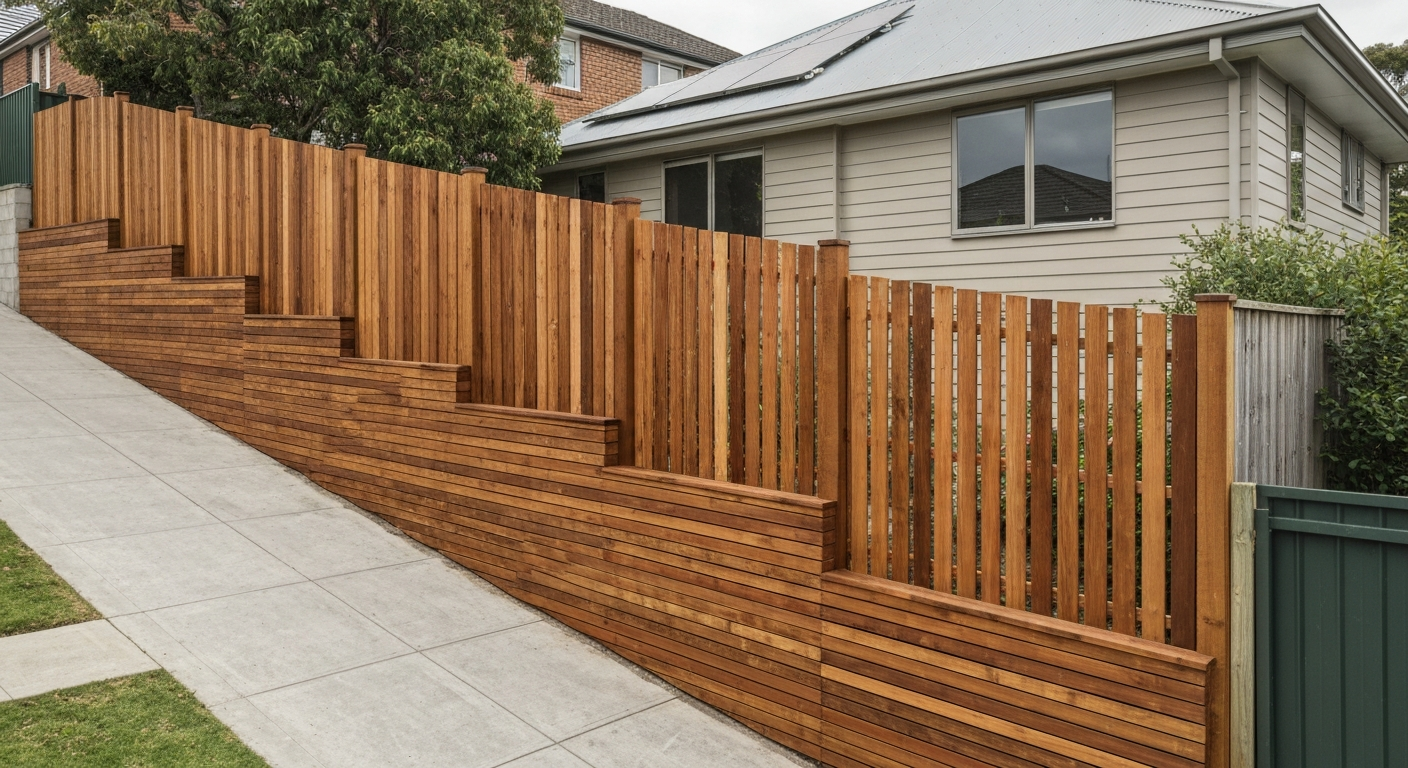
Some fencing choices are inherently lighter on a lawn. Surface-mount systems on concrete pads or walls indicate no digging in those areas. If a customer already has a constant concrete trim strip or a retaining wall, we think about core-drilling tight holes and establishing blog post bases with epoxy or anchors rather than cutting trenches in turf.
Post-on-pipe systems allow the use of a narrow steel post driven or set shallow in concrete, with a wood sleeve over quality. They utilize much less concrete and smaller holes. For chain web link, driven galvanized blog posts with driven leading rail sleeves use rate and virtually absolutely no spoils. Aluminum and vinyl systems with transmitted messages frequently need accurate openings, yet the lighter parts move quickly by hand, which decreases mat web traffic across lawns.
Every material has tradeoffs. Surface area mounts concentrate load right into supports, so you need sound concrete. Driven systems do not like rocky fill. Larger timber panels boost staff tiredness if you prohibit makers totally. The very best Fencing Builder evaluates these openly with you and does not require a solitary method for every single yard.
Honest conversations about price and time
Protective work includes time. Additional mats, spotters, vacuum cleaner digs near utilities, and two-stage cleanings cost actual dollars. A reputable Fence Contractor shows those line things and describes the value. If an estimate is the most inexpensive by far, ask what the plan is for access protection, ruin handling, and clean-up. If the responses are unclear, anticipate that financial savings to appear as yard repair service later.
We also put lawn problem notes in the agreement. Turf wetness today, noticeable slim locations, pending watering fixing, and concurred staging places all obtain made a note of. This clarity lowers drama and guides our crew lead in the area. It additionally anchors the warranty. We warrant the fencing, not the whole yard, yet we commit to returning a site to its pre-existing condition or far better, reasonably. If a thunderstorm strikes through mid put and mud travels, we go back to clean up without quibbling.
What house owners can do prior to the team arrives
A little prep from the customer makes a huge difference. Cut 2 to 3 days prior to install, not the day of. Shorter grass stands much better to foot traffic and dries much faster, yet fresh-cut blades contusion. Run an irrigation cycle two days prior if the dirt is powder dry. Soft, not soggy, digging is simplest on crews and turf. Clear toys, planters, top-rated fencing company and hoses from the fence line. If you have an animal, grab the yard. It is a difficult based on raise, yet neat yards keep staffs effective and more careful.
Share any type of quirks. Tell your Fence Installer where the sump discharge pops out, which corner gathers water after rainfall, and which flower bed conceals drip loopholes. This information shapes the accessibility plan and can cut in half the damage risk.
Red flags when hiring a Fencing Contractor
Watch exactly how a professional talks about your lawn. If they extol ending up in a day no matter what, ask what that rate appears like on your grass and soil. If they dismiss exclusive utility locates, maintain purchasing. If they do not carry tarps, floor coverings, and a magnet on the vehicle during the estimate, you already recognize exactly how they will certainly treat your site.
Look for specific language. A pro Fencing Installer states, we will present on the driveway, leapfrog 2 mats behind the house, connect back the boxwoods, and tarp spoils along the south line. An unclear pitch about taking care does not carry weight unless backed by a method.
Ask for 2 referrals especially about lawn condition, not just the fence itself. Call and ask, how did your yard look the evening they completed. Would you let them persuade your blossom beds again. The tone of that reply tells you greater than a gallery of pretty fences.
A closing word from the field
Minimal lawn damage is not magic, it is a string of small selections. Select dry days over damp. Select mats over bare lawn. Select tarpaulins under spoils, covers over wet concrete, and hand tools near vulnerable systems. Select a Fence Contractor that budgets for defense and can describe their series. When Fencing Contractors treat your yard as the work, not the challenge, the new fencing increases without a mess, and your weekend break plans do not include raking tire marks.
I have actually left tasks where the only ideas we existed were a straight line of blog posts and a fresh lock click, absolutely nothing else. That is bench. The ideal Fence builders, the best rhythm, and a little persistence get you there. And your grass will thanks long after the post holes are forgotten.